Best Places for Birdwatching in the Myrtle Beach Area
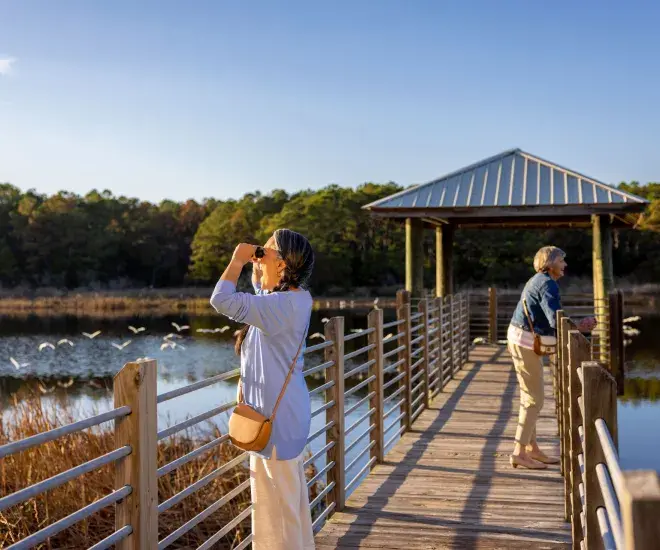
Birdwatching along the Grand Strand is full of small, unexpected moments. Whether you’re by the ocean, in a marsh, or along a blackwater river, there’s always something to spot.
Because the region sits along major migration routes, it’s a year‑round destination for everything from tiny warblers to soaring raptors. With 14 coastal communities and a mix of forests, wetlands, tidal creeks, and restored natural areas, more than 300 species pass through or call the area home.
You don’t need to be an expert to enjoy it here. A walk on the beach, a quiet trail, or a slow look through the trees is often enough to find something memorable.
From easy boardwalk strolls to more adventurous inland trails, the Grand Strand offers birdwatching experiences for every kind of explorer.
Top Birdwatching Areas in Myrtle Beach

Murrells Inlet
A 9,127‑acre property that preserves both natural and cultivated landscapes, offering frequent bird sightings throughout its gardens, historic rice fields, and forested paths. The river trail beyond the garden wall provides scenic viewing spots, and an enclosed aviary allows close observation of native birds that can no longer survive in the wild. Periodic bird walks (free with admission, limited to 16 guests) offer guided identification along the creek and garden areas, with binoculars and cameras encouraged.

Conway
This 325‑acre property features a three‑mile nature trail and boardwalk that offer easy, scenic access through wetlands and along the lake’s edge. A weather shelter with picnic tables provides a convenient break point, and the site serves as an important part of the Waccamaw National Wildlife Refuge.
North Myrtle Beach (Cherry Grove Beach)
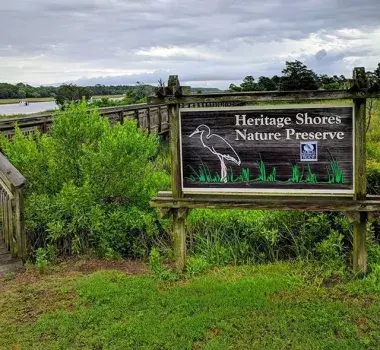
A peaceful seven‑acre preserve set within the Cherry Grove Marsh, offering boardwalks, observation decks, and winding paths with steady chances to spot blue herons, great egrets, Osprey, and other marsh‑loving species. Interpretive signs highlight local wildlife and make it easy for both seasoned birders and casual walkers to identify what they’re seeing.

Georgetown County (south of Pawleys Island)
A 16,000‑acre property owned by the Belle W. Baruch Foundation, showcasing a wide range of South Carolina’s coastal ecosystems alongside more than 70 cultural and historical sites. Access is available only through guided tours, which begin at the Hobcaw Barony Discovery Center—home to exhibits on the site’s ecology, research, and history, plus a 1,200‑gallon saltwater aquarium featuring native species. Special programs such as birding walks and night photography trips offer deeper exploration of the preserve’s diverse habitats.

Murrells Inlet
This hotspot offers one of the best birdwatching causeways on the East Coast, where a freshwater pond meets a saltwater tidal marsh. Osprey and eagles frequently hunt here, and during migration you may spot Roseate Spoonbills and Wood Storks alongside the resident alligators. Behind the nature center, feeders attract Red‑winged Blackbirds, finches, and Painted Buntings. With three miles of beach and more than 300 recorded species, it’s a premier destination for birders—and the park provides a printable birding checklist to help you keep score.

Around The Area
Several local outfitters offer guided experiences perfect for spotting birds across the Grand Strand’s rivers, marshes, and blackwater ecosystems. Black River Outdoors leads four-hour kayak trips to Sandy Island with opportunities to see Osprey, herons, and other wetland species. Waccamaw Outfitters offers seasonal guided paddling adventures and equipment rentals along the Waccamaw River corridor. For those who prefer to stay dry, Waccamaw River Tours provides wildlife cruises and a specialized Osprey Photography Tour that brings visitors close to nesting sites during the spring and summer breeding season.

Conway
Lake Busbee has long served as a familiar landmark for travelers arriving in Horry County. Originally built as a cooling pond for the Grainger Steam‑Electric Generating Plant, the lake has since returned to a natural wetlands state, creating habitat for Wood Storks, herons, egrets, shorebirds, Osprey, and eagles. A convenient 2.3‑mile walking and biking path circles the lake and offers easy viewing opportunities.

Carolina Forest / Conway
A 10,427‑acre preserve managed by the S.C. Department of Natural Resources, home to bald eagles, red‑cockaded woodpeckers, and a surprising variety of warblers—particularly around the Cartwheel and Mossy Bay trails. Visitors may also spot tracks from deer, foxes, or even South Carolina’s largest population of black bears, along with native orchids, wild azaleas, pitcher plants, and Venus flytraps.

Myrtle Beach
This state park has one mile of beach, dunes, a pier, and oak- and pine-filled forest. You will spot common sea and shore birds, waterfowl, Osprey, pelicans, and eagles fishing at the first state park in South Carolina. But, the half-mile Oak Nature Trail that winds through the Heritage Trust site maritime forest is where you will find those harder-to-spot species like warblers and cedar
North Myrtle Beach (Cherry Grove Beach)
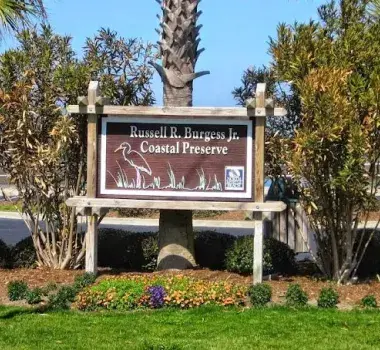
A boardwalk overlooking Cherry Grove Marsh—ideal for spotting herons, egrets, and shorebirds, with calm conditions perfect for tripods and scopes. The broader Cherry Grove area is also known as a reliable birdwatching hotspot, especially around its expansive marsh and inlet systems.

Georgetown County
The largest nature preserve in South Carolina at 9,165 acres, accessible only by boat. Kayak tours with Black River Outdoors paddle through quiet creeks to the Sandy Island dock, where a guided walk offers chances to see old‑growth forest, nesting Osprey in season, and great blue herons along the marsh edges. Sandy Island is also home to a historic Gullah community whose families have lived on the island for generations, preserving cultural traditions and a deep connection to the land.

Horry & Georgetown Counties
This U.S. National Wildlife Refuge features more than 30,000 acres of cypress swamps, wetlands, forested floodplains, and blackwater environments that support over 200 bird species—including swallow‑tailed kites. Visitors can explore by canoe or paddle through cypress stands and forested wetlands at Cox Ferry Lake, the Pee Dee River, or Yauhannah Lake, with opportunities for birding, wildlife viewing, fishing, hiking, and photography throughout this expansive refuge.
Little River
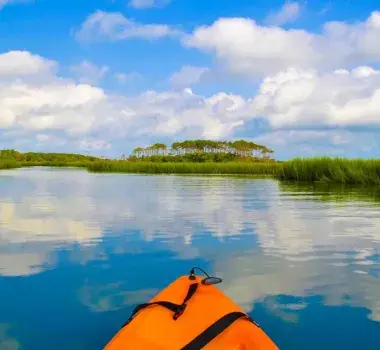
One of the last remaining undeveloped barrier islands on the South Carolina coast, Waites Island offers an adventurous setting for birdwatching. Kayak tours, paddleboarding routes, and even horseback rides lead visitors through untouched marsh and shoreline habitats where marsh hens, black skimmers, oystercatchers, terns, piping plovers, and bald eagles can often be seen in their natural environment.

Jo Clark is a travel writer—and a self-proclaimed beach bum! An award-winning photographer and a food and wine lover from South Carolina’s Grand Strand, Jo seeks off-the-beaten-path places with abundant wildlife, good food, and delicious wine! Born, reared, and educated in southwestern Virginia, she loves history, has edited two WWII books, and co-authored several Civil War biographical volumes. She is the editor of Recipes Travel Culture online magazine, and a member of IFWTWA, TravMedia, and the Travel Writer’s University. You can follow her adventures on Instagram @JoGoesEverywhere or on Facebook at Have Glass, Will Travel.